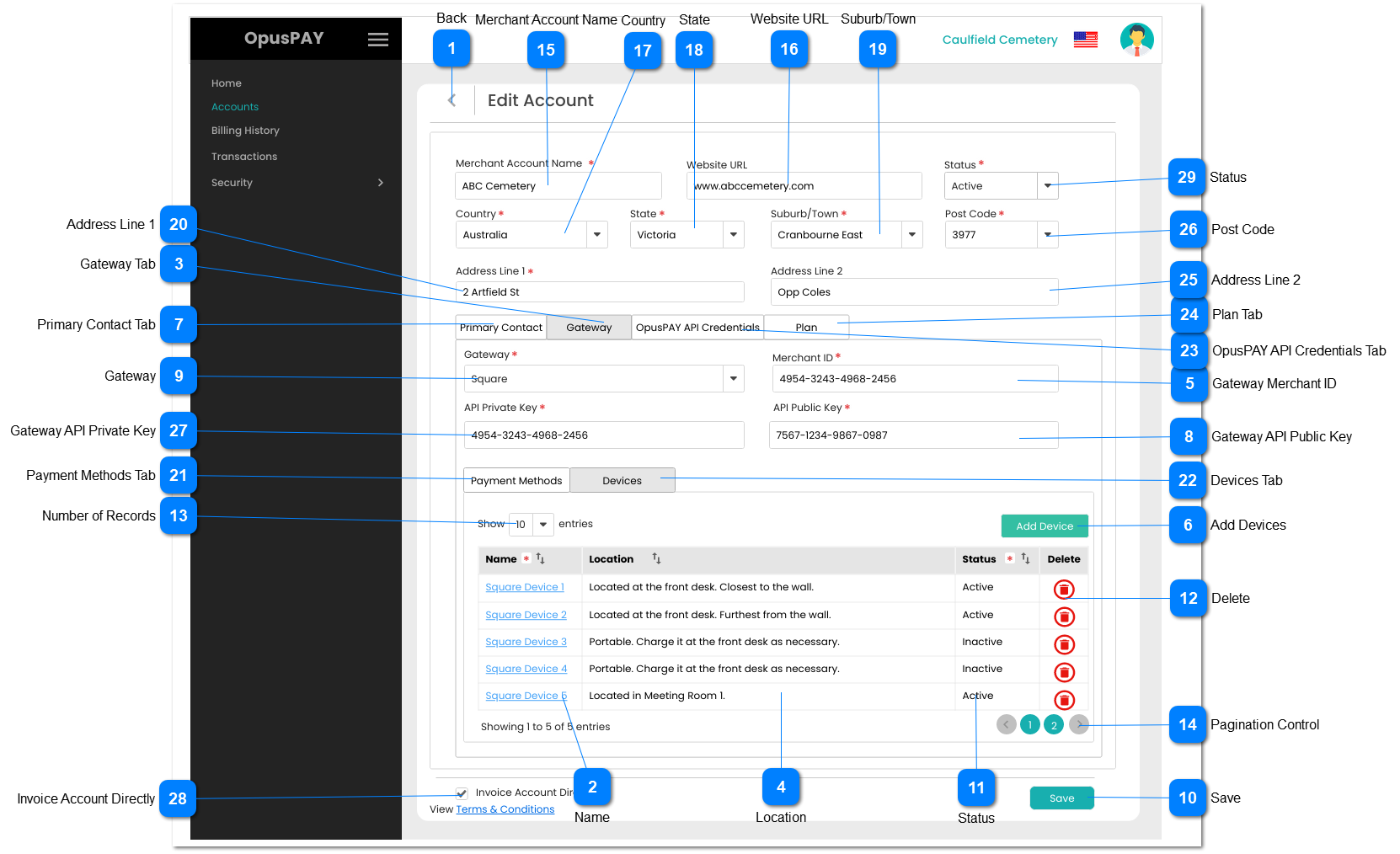
1. If linking to the Parent Entity's gateway account, display Merchant ID and set field to disabled. If the Account will have it's own Gateway account, enable this field and allow the user to enter the Merchant ID.
2. This should display an inline error message if the user clicks the Submit button without populating this field.
1. If linking to the Parent Entity's gateway account, display Gateway API Public Key and set field to disabled. If the Account will have it's own Gateway account, enable this field and allow the user to enter the Gateway API Public Key.
2. This should display an inline error message if the user clicks the Submit button without populating this field.
1. This will display the current Gateway for the Account.
2. If the Account is not linked to the PrimaryEntity's Gateway, this should allow the user to change the Gateway for the Account.
3. This list should be flltered to only show Gateways where the accepted Country matches the country the merchant is located in.
4. When a Gateway is selected, clear all fields on the Gateway tab (including the Payment Methods and Devices tabs) and repopulate the list of "Payment Methods" based on the options the Gateway allows.
5. If the user clicks on the Save button without entering a value in this field, display an inline error message and do not create the record.
1. Check the rules mentioned in each input element on both the Payment Methods and Devices tabs, and show inline error messages for invalid / unpopulated inputs.
2. If the validation results are successful save all Gateway options selected and entered.
3. Navigate the user to the View Account - Gateway Details - Devices screen. Refer to the specifications for that screen here.
1. This will allow the user to "delete" a Device from this table.
2. Devices should never be deleted from the database, only from this list. Deleted Devices will still need to be used for any reports, etc. where the Device is linked to a transaction.
1. This should allow the user to select a Country. List of available countries comes from the Countries & Currencies list set in the Admin Portal. Refer to the specifications for that screen here.
2. Use the same Address Component and logic as per byondcloud registration page.
3. This should display an inline error message if the user clicks the Submit button without populating this field.
1. This displays the Gateway's Payment Methods and allows the user to select which Payment Methods the Account will offer. Refer to the specifications for that screen here.
1. If linking to the Parent Entity's gateway account, display Gateway API Private Key and set field to disabled. If the Account will have it's own Gateway account, enable this field and allow the user to enter the Gateway API Private Key.
2. This should display an inline error message if the user clicks the Submit button without populating this field.
1. This should display the status of the Account (Active or Inactive). If the Account is Active, it is able to pass transactions through opuspay. If Inactive, the Account cannot pass transactions through opuspay.
2. If the user changes the Status from Active to Inactive for a Parent Account, all Sub Accounts that are set to "Invoice Account Directly" = "False" and/or where the Gateway is set to "Link to the Parent Entity's gateway account", set the Sub Account to Inactive as well.
byondpro should also be updated to show that the merchant account is inactive (which would display as On-Hold in byondpro).
3. If the Parent Merchant Account has been set to Inactive from the Admin Portal, all Sub Accounts must be set to Inactive as well and neither the Parent or Sub Accounts can be set to Active. They can only be activated from the Admin portal again.