OpusPAY
User guide
×
Menu
Index

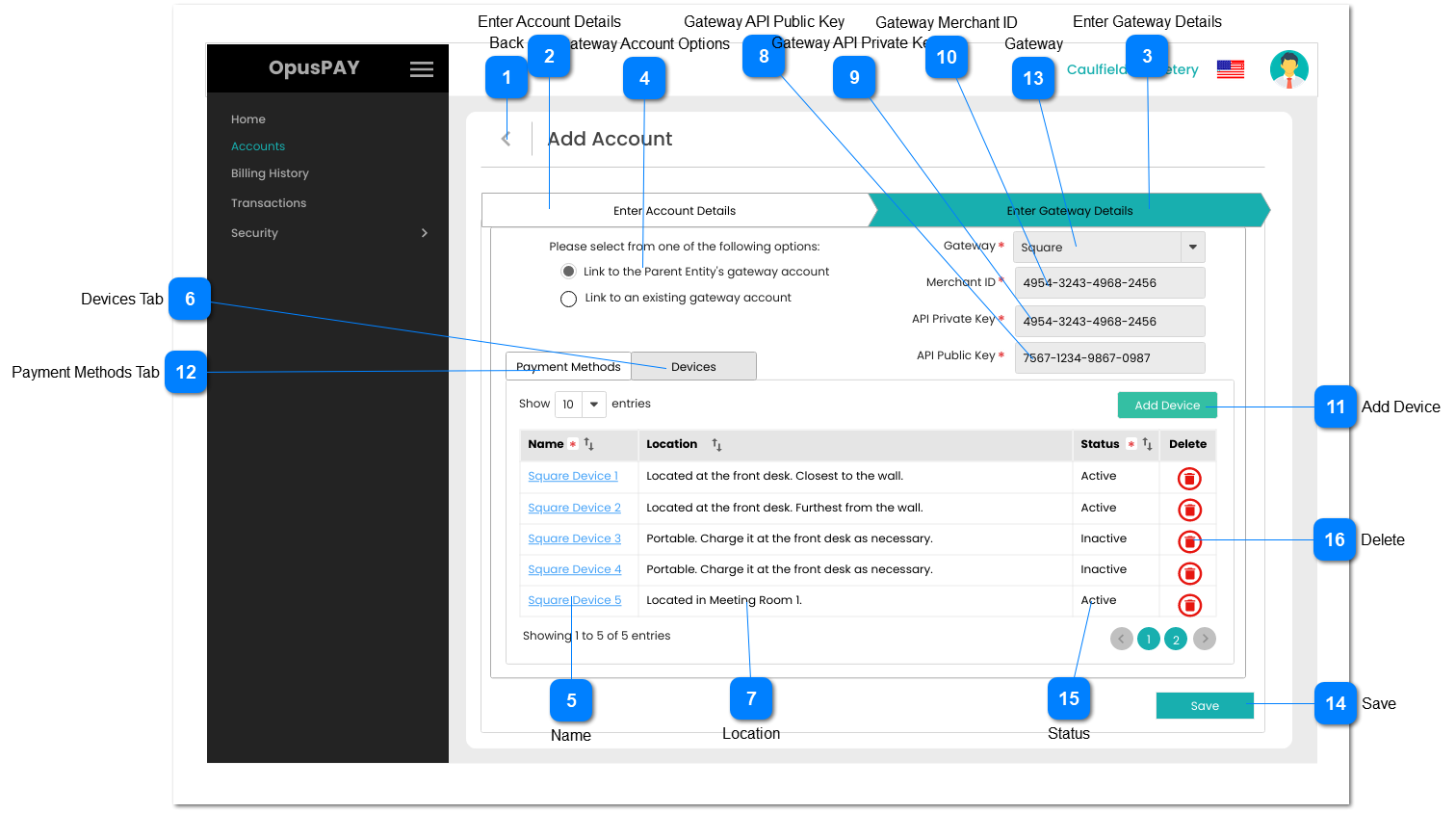
Add Account - Enter Gateway Details - Devices

This screen allows the user to add sub-accounts to their merchant portal.
 
Add Account - Enter Gateway Details - Devices
1

Back

 
Type
Notes
Rules
Compulsory
Format
Edit
Size
Default
Error Message
Button
-
1. When clicked this should navigate the user to Enter Account Details screen. Refer to the specification for that page here.
-
-
Y
-
-
-
2

Enter Account Details

 
Type
Notes
Rules
Compulsory
Format
Edit
Size
Default
Error Message
Tab
-
1. This is the first step in adding an Account to the merchant portal.
 
2. When clicked this should navigate the user to Enter Account Details screen. Refer to the specification for that page here.
-
-
Y
-
-
-
3

Enter Gateway Details

 
Type
Notes
Rules
Compulsory
Format
Edit
Size
Default
Error Message
Tab
-
1. This is the second step in adding an Account to the merchant portal.
 
2. This step should be highlighted to identify the tab the user is on.
-
-
 
-
-
-
4

Gateway Account Options

 
Type
Notes
Rules
Compulsory
Format
Edit
Size
Default
Error Message
Text
-
1. These radio buttons determine if the Account is linked to the Parent Entity's Gateway account or if the Account will have it's own Gateway account.
 
2. If the "Link to the Parent Entity's Gateway account" option is selected, disable and autopopulate the Gateway, Merchant ID, API Private Key, and API Public Key.

3. If the "Link to an existing gateway account" option is selected, clear and enable the Gateway, Merchant ID, API Private Key, and API Public Key fields.
-
-
Y
-
Link to Parent Entity's Gateway Account
-
5

Name

 
Type
Notes
Rules
Compulsory
Format
Edit
Size
Default
Error Message
Hyperlink
-
1. This will display the Device Names as a hyperlink.
 
2. Clicking on the hyperlink will navigate the user to the Add/Edit Device details screen. Refer to the specifications for that screen here.
 
3. The column should be sortable
-
-
N
-
-
-
6

Devices Tab

 
Type
Notes
Rules
Compulsory
Format
Edit
Size
Default
Error Message
Tab
-
1. This should allow for the entry of the Primary Contact's Given Name.
 
2. This tab should be highlighted to identify the tab the user is on.
-
-
Y
-
-
-
7

Location

 
Type
Notes
Rules
Compulsory
Format
Edit
Size
Default
Error Message
Column
-
1. This will display details as to the location of the device.
 
2. This should be sortable.
-
-
N
-
-
-
8

Gateway API Public Key

 
Type
Notes
Rules
Compulsory
Format
Edit
Size
Default
Error Message
Text
-
1. If linking to the Parent Entity's Gateway, display Gateway API Public Key. If the Account will have it's own Gateway account, allow the user to enter the Gateway API Public Key.
 
2. This should display an inline error message if the user clicks the Save button without populating this field.
Y
-
Y
-
Disabled
2. Please enter the Gateway API Public Key.
9

Gateway API Private Key

 
Type
Notes
Rules
Compulsory
Format
Edit
Size
Default
Error Message
Text
-
1. If linking to the Parent Entity's Gateway, display Gateway API Private Key. If the Account will have it's own Gateway account, allow the user to enter the Gateway API Private Key.
 
2. This should display an inline error message if the user clicks the Save button without populating this field.
Y
-
Y
-
Disabled
2. Please enter the Gateway API Private Key.
10

Gateway Merchant ID

 
Type
Notes
Rules
Compulsory
Format
Edit
Size
Default
Error Message
Text
-
1. If linking to the Parent Entity's gateway account, display Merchant ID. If the Account will have it's own Gateway account, allow the user to enter the Merchant ID.
 
2. This should display an inline error message if the user clicks the Submit button without populating this field.
Y
-
Y
255
Disabled.
2. Please enter the Merchant ID.
11

Add Device

 
Type
Notes
Rules
Compulsory
Format
Edit
Size
Default
Error Message
Button
-
1. This will navigate the user to the add/edit device screen allowing the user to enter details for a new Device. Refer to the specification for that device here.
-
-
Y
-
-
-
12

Payment Methods Tab

 
Type
Notes
Rules
Compulsory
Format
Edit
Size
Default
Error Message
Tab
-
1. This displays the Payment Method options the Gateway allows. Refer to the specifications for that screen here.
-
-
Y
-
-
-
13

Gateway

 
Type
Notes
Rules
Compulsory
Format
Edit
Size
Default
Error Message
Dropdown
-
1. If linking to the Parent Entity's gateway account, display the parent entity's Gateway. If the Account will have it's own Gateway account, allow the user to select a Gateway from the list
 
2. This list should be flltered to only show Gateways where the accepted Country matches the country the merchant is located in.
 
3. When a Gateway is selected, clear all fields on the Gateway tab (including the Payment Methods and Devices tabs) and repopulate the list of "Payment Methods" based on the options the Gateway allows.
 
4. If the user clicks on the Save button without entering a value in this field, display an inline error message and do not create the record.
Y
-
Y
-
Parent Entity's Gateway account
4. Please enter the Gateway.
14

Save

 
Type
Notes
Rules
Compulsory
Format
Edit
Size
Default
Error Message
Button
-
1. Check the rules mentioned in each input element on both the Payment Methods and Devices tabs, and show inline error messages for invalid / unpopulated inputs.
 
2. If the validation results are successful save all Gateway options selected. Also, if the account will have it's own Gateway account, automatically generate OpusPAY API credentials and assign them to this merchant.
 
4. Navigate the user to the Accounts screen. Refer to the specifications for that screen here.
-
-
-
-
-
-
15

Status

 
Type
Notes
Rules
Compulsory
Format
Edit
Size
Default
Error Message
Column
-
1. This will display the Status of the Device (active or inactive).
 
2. This should be sortable.
-
-
N
-
-
-
16

Delete

 
Type
Notes
Rules
Compulsory
Format
Edit
Size
Default
Error Message
Button
-
1. This will allow the user to "delete" a Device from this table.
 
2. Devices should never be deleted from the database, only from this list. Deleted Devices will still need to be used for any reports, etc. where the Device is linked to a transaction.
-
-
-
-
-
-